
Educational guide to breathing rhythms that lengthen the out-breath — often used before sleep or after a busy day.
When daily life feels demanding, breathing often becomes quicker and shallower. Down-regulating patterns deliberately lengthen the out-breath relative to the inhale. Many people use these rhythms as part of a personal wind-down routine — similar to how a deep sigh can feel settling.
Some published studies on slow breathing have examined heart-rate variability and subjective calm in controlled settings. Findings vary between studies and populations. We describe this research for general education — not as evidence that any technique will produce a specific result for you.
A common approach: inhale for a short count, then exhale for a longer count, repeating for a few minutes in a quiet space. Structured practice simply makes the rhythm deliberate and repeatable.

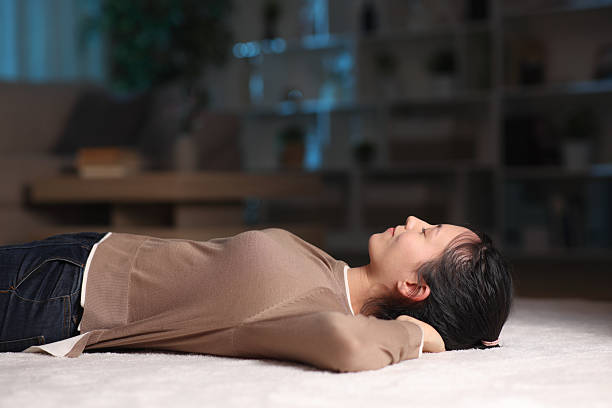
Consistency transforms a technique into a habit. Choose a fixed trigger — brushing teeth, dimming lights, or getting into bed — and attach three to five minutes of down-regulating breathwork. Your nervous system learns to associate the pattern with safety and rest.
Environmental cues amplify the effect. Lower room temperature slightly, reduce screen brightness thirty minutes before practice, and use a comfortable seated or lying position. Nasal breathing during the inhale filters and warms air; pursed-lip exhalation during the out-breath naturally slows the release.
Avoid practising while ruminating on the day's problems. Instead, place attention on the physical sensation of air leaving your body — the rise and fall of the ribcage, the gentle pause at the bottom of each breath. This sensory focus is itself a form of mental rest.
The exhale phase activates the parasympathetic nervous system through vagal stimulation. A longer exhale gives this calming signal more time to take effect. In contrast, a long inhale or inhale-focused pattern tends to be more alerting — which is why up-regulating and down-regulating techniques use opposite ratios.
Yes. The physiological sigh (two inhales, one long exhale) takes about ten seconds and can be done discreetly at a desk. For a longer reset, step away for three minutes of double-exhale-ratio breathing. No special equipment or space is needed.
Most healthy adults can practise 4-7-8 breathing without issue. The seven-second hold may feel uncomfortable for some — skip the hold and use a 4-in, 8-out pattern instead. People with respiratory conditions should consult a health professional before practising breath retention.
Down-regulating techniques are generally gentle, but breath holds can cause dizziness in some people. If you feel faint, return to normal breathing immediately. Do not practise breath retention underwater or while standing where a fall is possible. These guides are general lifestyle information only — not clinical care. If you have ongoing sleep or wellbeing concerns, speak with a qualified professional.